📋 In This Article
Case Background
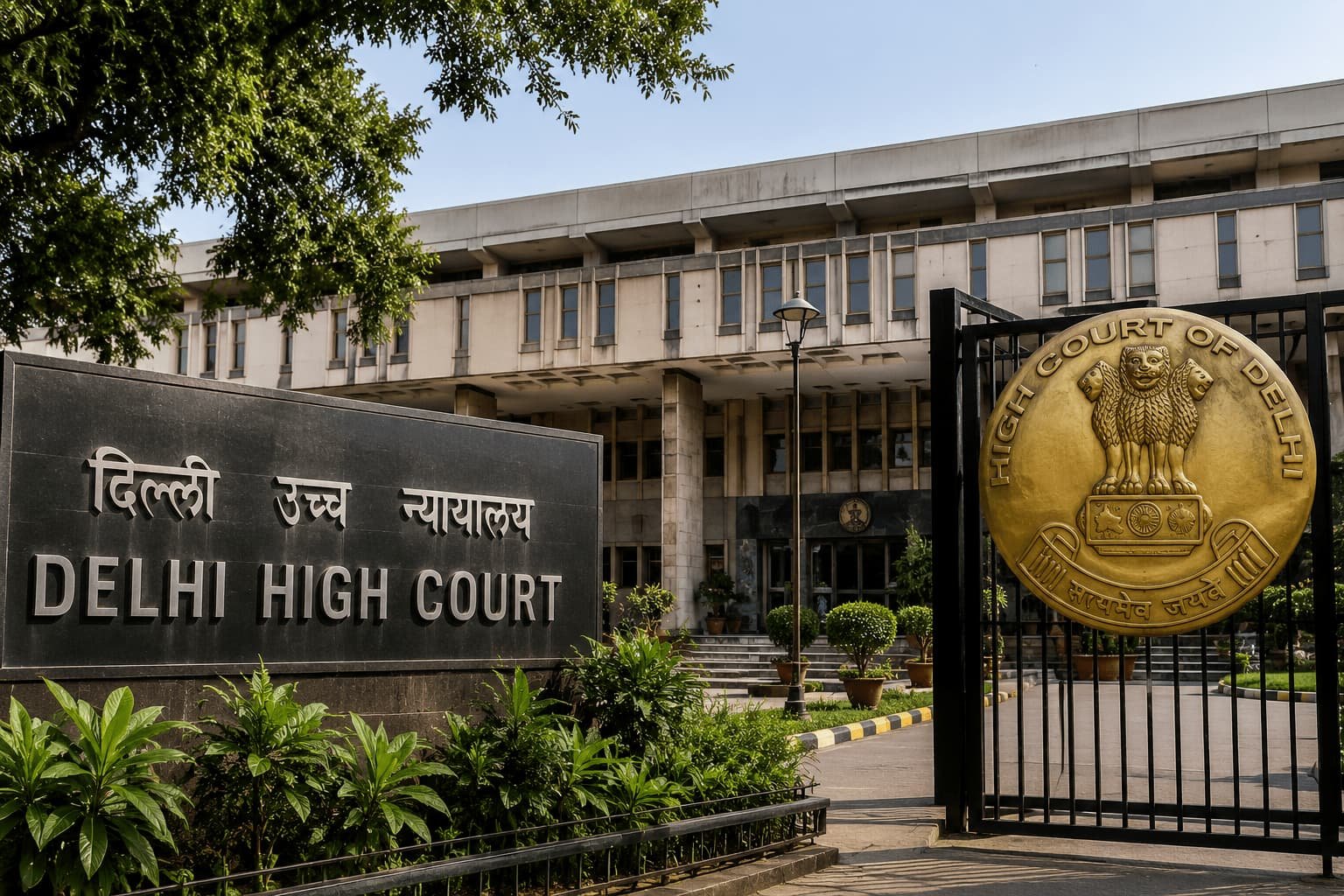
The Delhi High Court delivered a swift and decisive ruling in a trademark and trade dress infringement dispute in the battery industry. On 3 July 2026, Justice Anup Jairam Bhambhani granted an ex-parte ad-interim injunction restraining Hind Enterprises — a Haridwar-based battery seller — from using the trademark EASTHRON along with its associated packaging, finding both prima facie deceptively similar to the established EASTMAN trademark of Eastman Auto and Power Limited.
| Case Title | Eastman Auto and Power Limited v. M/S Hind Enterprises & Anr. |
| Case Number | CS(COMM) 684/2026 |
| Citation | 2026 LLBiz HC(DEL) 687 |
Upload this PDF to /Blog/judgments/ folder on your server
💼 Adv. Nikhil Soni & Co. — 23+ years of exclusive IP practice, 5000+ trademarks filed across India. We personally handle every IPR matter. Book a free consultation →
The Marks Compared — EASTMAN vs EASTHRON
Eastman Auto and Power Limited is an established battery manufacturer whose EASTMAN trademark is registered and well-known in the battery and power product category.
Hind Enterprises, a Haridwar-based battery seller, had adopted the EASTHRON mark for similar battery products. Eastman approached the court alleging that EASTHRON was substantially identical to EASTMAN and was being used with trade dress that closely copied Eastman's packaging.
EASTHRON and EASTMAN share the same first four letters E-A-S-T — creating strong visual similarity when displayed on battery packaging at the point of sale.
Both marks begin with the distinctive EAST- prefix and end with a consonant-cluster suffix. When spoken in trade, they are easily confused by consumers purchasing batteries.
Both marks were being used on batteries — identical goods, which satisfies one element of the Triple Identity Test for infringement.
Hind Enterprises used packaging that was "substantially identical" to Eastman's — copying not just the name but the overall visual identity of the brand.
Trade Dress Infringement
Beyond the word mark, a critical aspect of this case was the alleged copying of Eastman's trade dress — the overall visual appearance of its product packaging including colour scheme, label design and layout.
The court found that the defendant's packaging was "substantially identical" to the plaintiff's trade dress. This is a particularly important aspect of the ruling: even if a competing seller changes the product name, copying the packaging creates the same consumer confusion as copying the name itself.
Trade dress protection is especially significant in the battery and power products industry, where consumers often recognise brands by their distinctive packaging colours and label design rather than reading the product name carefully — particularly at the point of purchase in electrical shops and hardware stores.
Delhi High Court's Order
Justice Anup Jairam Bhambhani observed that Eastman had made out a prima facie case in its favour and against the defendants. The court found that the balance of convenience favoured Eastman, noting that "irreparable harm and injury would result to the plaintiff if the interim relief sought is not granted."
The court accordingly restrained Hind Enterprises and the second defendant — a Guwahati-based entity responsible for printing and producing the infringing labels and packaging — from using the EASTHRON mark, trademark, wordmark or trade dress until the next date of hearing.
The matter has been listed before the Joint Registrar for completion of pleadings on 24 September 2026.
Deceptive Similarity — The Legal Test
The test for deceptive similarity under Section 2(h) of the Trade Marks Act 1999 is whether the mark "so nearly resembles" another as to be likely to deceive or cause confusion among ordinary consumers. Key principles applied by courts:
- Ordinary consumer standardThe test is applied from the perspective of an ordinary consumer with average intelligence and imperfect recollection — not an expert making a careful side-by-side comparison
- Overall impressionMarks are compared as a whole — their overall commercial impression — not feature by feature. The dominant part of the mark receives greater weight
- Visual, phonetic and conceptualSimilarity is assessed across three dimensions: visual appearance, phonetic sound when spoken aloud, and conceptual meaning or association
- Same class of goodsWhen marks are used on identical goods, the standard for finding similarity is lower — a lesser degree of similarity suffices to establish likelihood of confusion
Key Lessons
- Never copy a competitor's packagingTrade dress copying — imitating packaging colour, label design or overall visual identity — is actionable even if the product name is different. Courts treat packaging imitation as seriously as name infringement
- EAST- prefix is protectedMarks with the distinctive EAST- prefix in the battery category are registered and protected — new entrants should avoid confusingly similar prefixes
- Ex-parte orders come fastCourts can and do grant immediate injunctions without hearing the defendant — once an ex-parte order is passed, the infringer must cease immediately or face contempt
- Label printers are also liableThe Guwahati-based entity that printed Hind Enterprises' labels was also named as a defendant — those who assist in creating infringing materials can be restrained alongside the primary infringer
- Register your trade dressDistinctive packaging, colour schemes and label designs should be registered as trademarks in India under the Trade Marks Act 1999 — providing statutory protection in addition to common law trade dress rights
Why Choose Adv. Nikhil Soni & Co.?
- Personal handling by senior advocateAdv. Nikhil Soni personally handles every trademark infringement matter — clients deal directly with the advocate, not junior staff
- 23+ years, 5000+ trademarksExclusive IP practice since 2001 — trademark, patent, copyright, design and trade secret
- All India coverageAuthorised to appear before all five Trade Marks Offices and IP Courts across India
- End-to-end serviceSearch, filing, objection reply, enforcement and litigation — complete IP lifecycle management
Frequently Asked Questions
What happened in the Eastman vs EASTHRON trademark case?
The Delhi High Court on 3 July 2026 granted an ex-parte ad-interim injunction restraining Hind Enterprises, a Haridwar-based battery seller, from using the EASTHRON trademark and trade dress. Justice Anup Jairam Bhambhani found that EASTHRON was prima facie deceptively similar to Eastman Auto and Power Limited's registered EASTMAN trademark, and that the defendant's packaging was substantially identical to the plaintiff's trade dress. The matter will proceed to trial.
What is deceptive similarity in trademark law?
Deceptive similarity under Section 2(h) of the Trade Marks Act 1999 means a mark so nearly resembling another as to be likely to deceive or cause confusion among ordinary consumers. Courts assess deceptive similarity across three dimensions — visual appearance, phonetic sound and conceptual meaning — from the perspective of an average consumer with imperfect recollection making a purchasing decision. In the EASTMAN vs EASTHRON case, the court found the marks prima facie deceptively similar based on their visual and phonetic resemblance on identical goods.
What is trade dress in Indian trademark law?
Trade dress refers to the overall visual appearance of a product or its packaging — encompassing colour schemes, label design, shape, layout and other distinctive visual elements that identify the commercial source of goods to consumers. Trade dress can be registered as a trademark under the Trade Marks Act 1999 if it has acquired distinctiveness. It can also be protected through passing off actions without registration. In this case, the court found the defendant's packaging substantially identical to the plaintiff's trade dress — restraining both the name and the packaging.
What is an ex-parte ad-interim injunction in trademark cases?
An ex-parte ad-interim injunction is a temporary court order granted in urgent cases without hearing the opposing party. The court grants such relief when satisfied that a prima facie case for infringement exists, that the balance of convenience favours the plaintiff, and that irreparable harm would result if relief is delayed until the defendant is heard. Once granted, it immediately restrains the infringer — who must then apply to the court to vacate or modify the order. This is the fastest remedy available in trademark infringement cases.
Why is trade dress protection important for battery and FMCG brands?
In the battery, FMCG and electrical products industry, consumers frequently make quick purchasing decisions based on visual recognition of familiar packaging — rather than carefully reading product names. A competitor who copies the distinctive packaging design, colour scheme and label layout of an established brand can divert its sales through consumer confusion, even while using a different product name. Trade dress protection enables established brands to prevent such packaging imitation and protects the significant investment made in developing distinctive visual branding.
Official Resource: Visit Trade Marks Registry, IP India for authoritative government information.